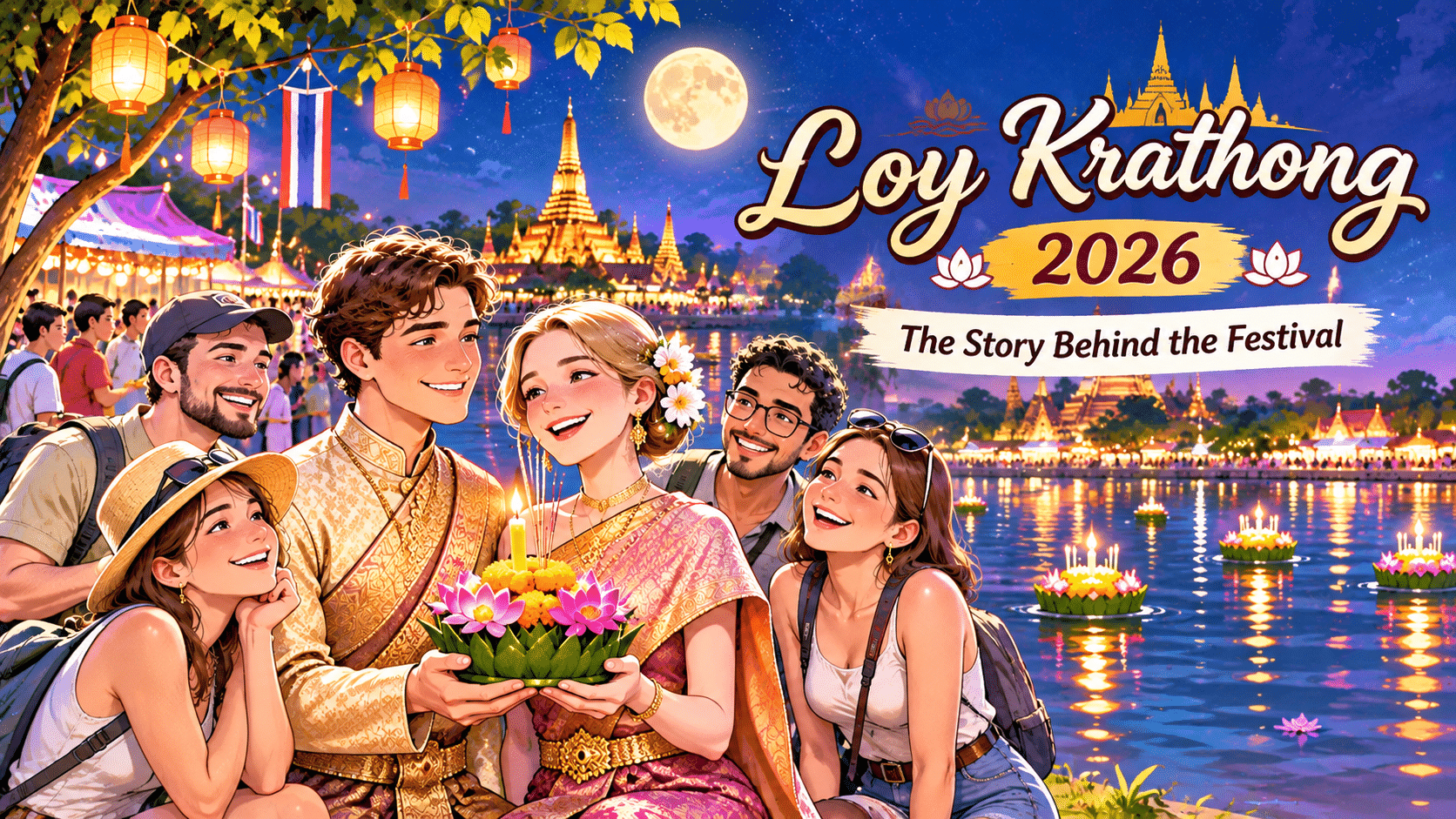
Loy Krathong 2026
Loy Krathong 2026: The Story Behind the Festival
On the full moon night of the twelfth lunar month, the canals are full, and everyone comes together to enjoy the fun of Loy Krathong.
Many people from around the world love Thailand’s Loy Krathong Festival. Every November, a large number of tourists travel to Thailand to experience this beautiful traditional celebration.
As Loy Krathong 2026 approaches, I would like to share the story behind this festival with you. Have you ever wondered where Loy Krathong came from and how this beautiful Thai tradition began?
Today, let me take you on a journey through the stories, history, and beliefs behind one of Thailand’s most well-known festivals.
Nang Noppamas and the Origins of Loy Krathong
This is one of the fascinating stories behind Loy Krathong 2026.
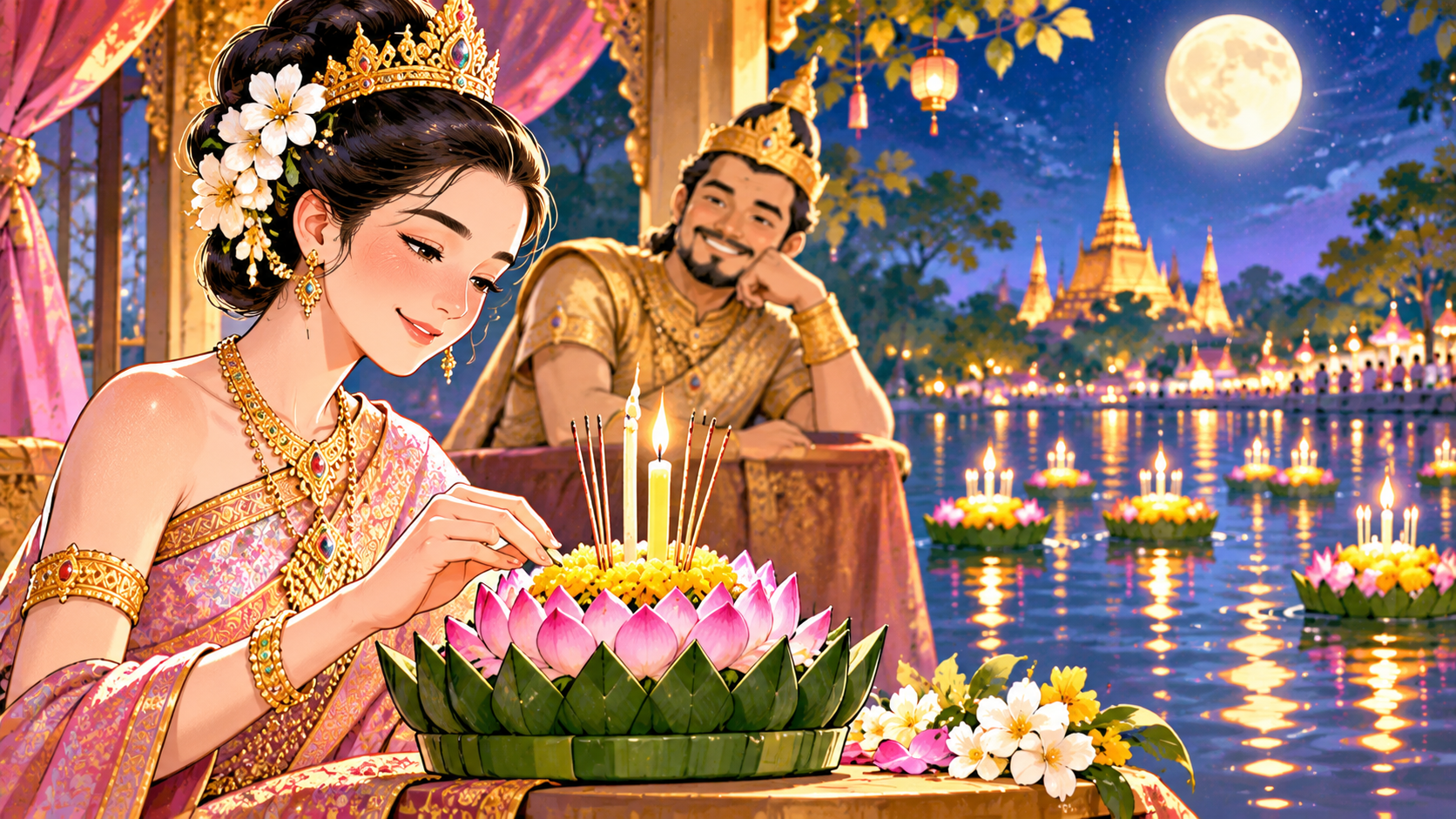
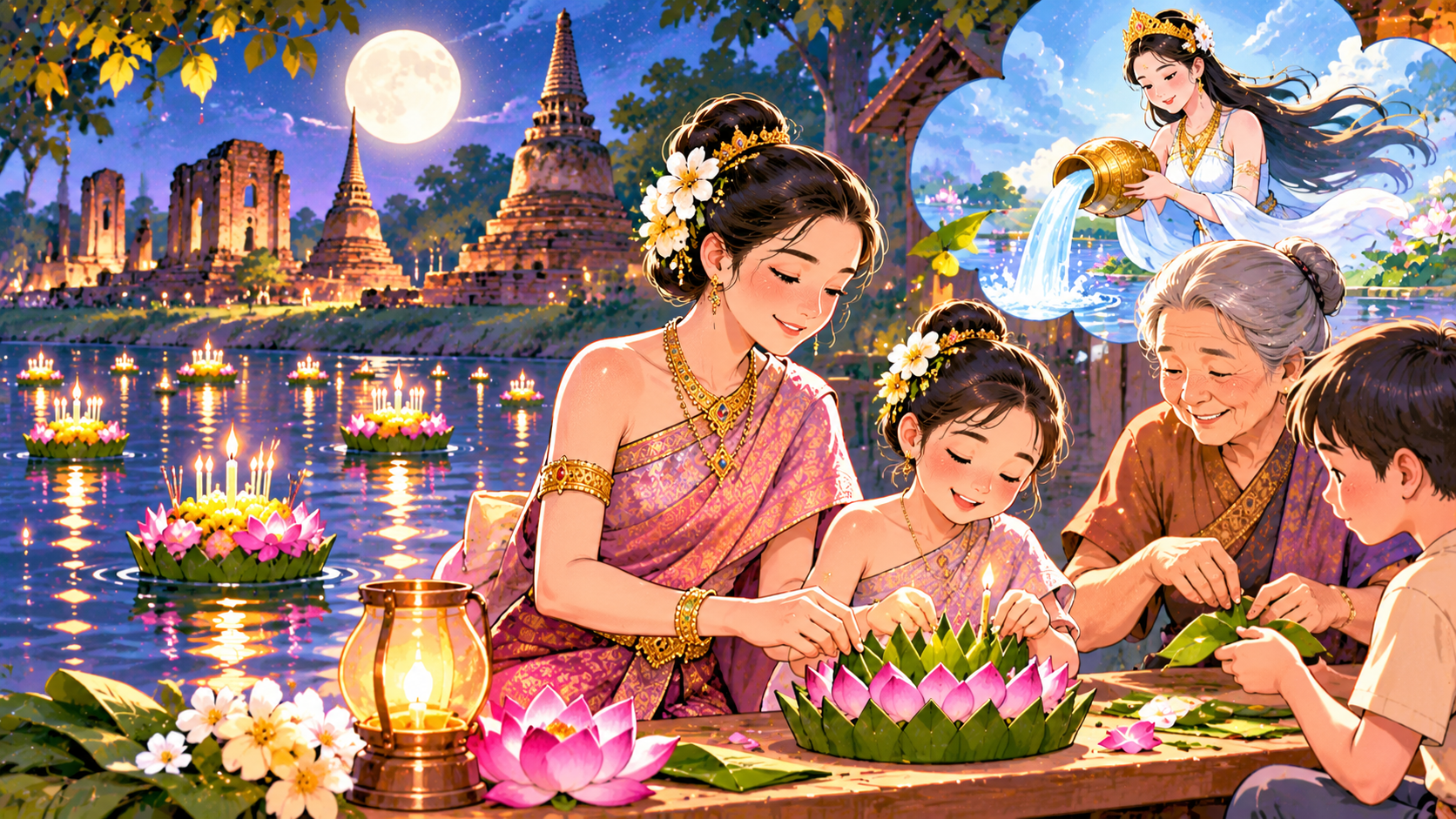
According to a story passed down through generations, there was once a woman named Nang Noppamas. She served in the royal court during the reign of King Phra Ruang. She created a krathong shaped like a lotus flower to be used as an offering on the full moon night of the twelfth lunar month.
Her krathong was beautifully decorated, with flower petals carefully arranged and incense sticks and candles placed on top.
After finishing her creation, she brought the krathong to show King Phra Ruang. He was impressed by her creativity and admired her work. “How beautiful!” he exclaimed.
Nang Noppamas was known for both her beauty and creativity. Her story has become part of the tales associated with Loy Krathong, the festival that visitors from around the world come to experience in Thailand today.
Ancient Traditions Behind Loy Krathong
Have you ever heard of the ancient royal ceremony called “Chong Prieng”?
It was an ancient ceremony involving fire worship, raising lanterns, and floating lanterns on water. It is believed to have been influenced by fire-worship practices from Brahmanism and Hinduism in India.
In ancient times, the ceremony was divided into three main parts.
The First Part: Raising Lanterns
This involved placing oil lamps inside lanterns and raising them onto tall poles to illuminate the royal palace.
The Second Part: Arranging Small Lights
Small lights were prepared and placed in rows along the city walls or palace walls, creating a long line of light.
The Third Part: Floating Lanterns on Water
This may have involved releasing lanterns onto the water, in a way that was similar to the floating krathongs we see today.
Note: The idea that this ceremony was influenced by fire-worship practices from Brahmanism and Hinduism is a cultural theory rather than a proven conclusion. The exact details of floating lanterns on water are also still uncertain.
Loy Krathong and the Thai Lunar Calendar
Have you ever wondered why Thai people call it the “twelfth lunar month” when November is actually the eleventh month of the year?
The answer is that Thailand has traditionally used a lunar calendar, which is different from the international calendar we use today.
The International Calendar
The international calendar follows the solar year, which is based on the Earth’s orbit around the Sun. November is the eleventh month, while December is the twelfth month.
The Thai Lunar Calendar
The Thai lunar calendar follows the phases of the Moon. It begins with the first lunar month, known as “Duean Ai” (Month 1), followed by the second lunar month, and continues until the twelfth lunar month.
The first lunar month usually begins around December. This is why the twelfth lunar month often falls around November in the international calendar.
Why Do Thai People Often Mention the Twelfth Lunar Month?
It is because Thailand’s Loy Krathong Festival takes place on the full moon night of the twelfth lunar month according to the Thai lunar calendar. This date usually falls in November on the international calendar.
That is why Loy Krathong is commonly celebrated in November, even though Thai people refer to it as the twelfth lunar month.
Phra Mae Khongkha and Loy Krathong
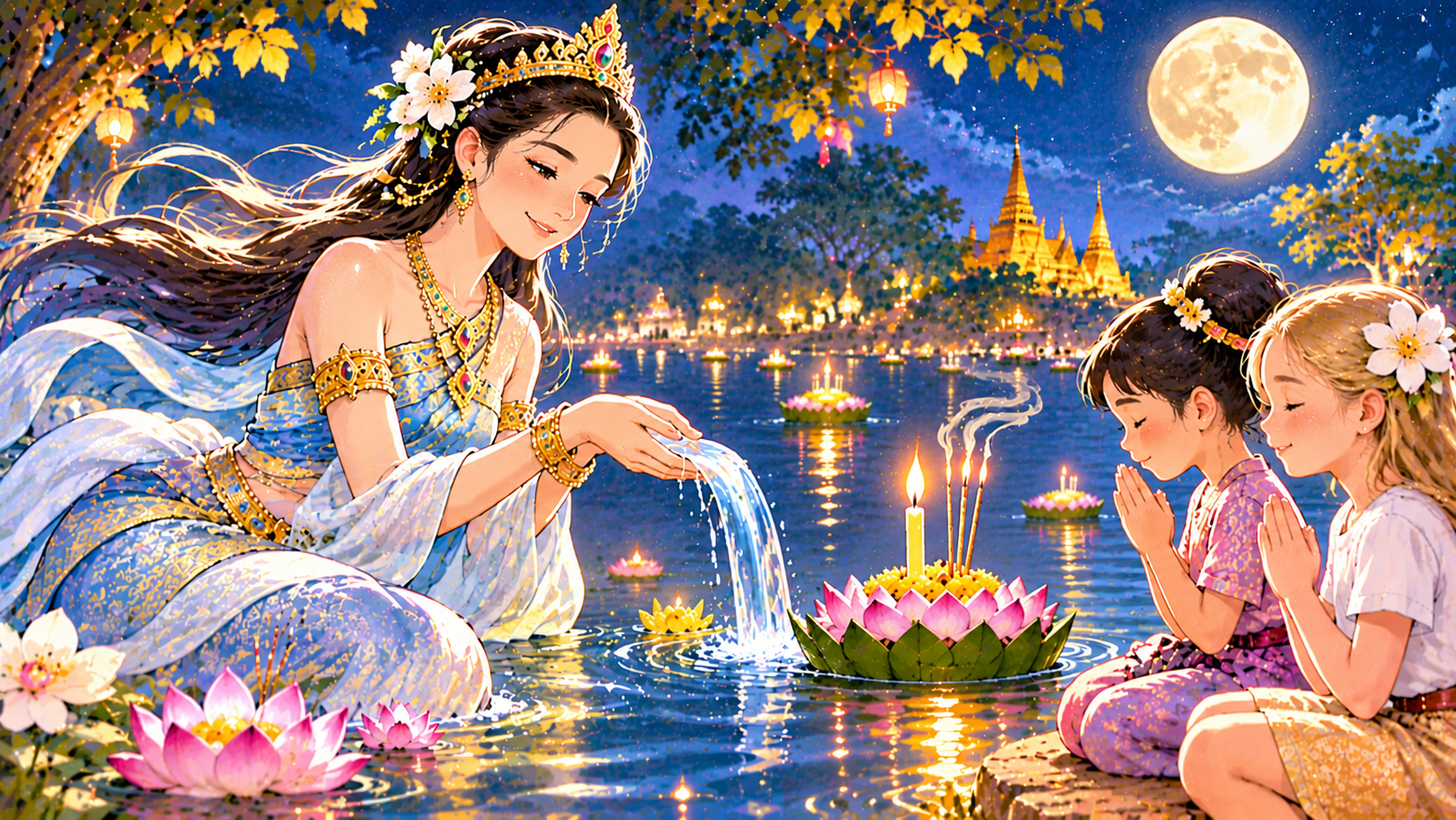
Thai people float krathongs to pay respect to Phra Mae Khongkha, but who is she really?
Phra Mae Khongkha is the goddess of the Ganges River in India, according to Hindu beliefs.
The Ganges is considered a sacred river and is believed to have the power to cleanse sins. Many people travel there to worship and take part in religious ceremonies along the river, just as you may have seen in the video.
However, in Thai beliefs, Phra Mae Khongkha does not represent only the Ganges River. She is also seen as a symbol of all bodies of water, including rivers, canals, ponds, lakes, and even the sea.
This belief comes from a blend of traditional Thai beliefs about water spirits and supernatural beings that protect nature, together with beliefs from Hinduism.
As a result, Thai people have expanded the meaning of Phra Mae Khongkha from the goddess of the Ganges River in India to a guardian of the rivers and water sources that people depend on in their daily lives.

Beliefs and Traditions of Loy Krathong
These beliefs are still part of the Loy Krathong 2026 celebration.
Loy Krathong has several meanings and beliefs in Thai culture.
One of the main beliefs is to ask for forgiveness from Phra Mae Khongkha, the goddess associated with water. Thai people use water in their daily lives for drinking, household activities, farming, and many other purposes. However, human activities can sometimes pollute rivers and other water sources. Floating a krathong is therefore a way of showing respect and asking for forgiveness from the water, according to Thai beliefs.
Apart from asking for forgiveness, some Thai people also believe that floating a krathong can help them get rid of bad luck. They believe that the krathong carries away negative things, misfortune, and worries as it floats downstream.
Some people may also put a small piece of their hair or fingernail into the krathong. This represents letting go of bad things in their lives. As they release the krathong onto the water, they make a wish and ask Phra Mae Khongkha to wash away the negativity they have been carrying. They also hope for happiness, good fortune, and a better life ahead.
However, these beliefs and practices may vary from person to person and from family to family. Not everyone follows the same traditions.
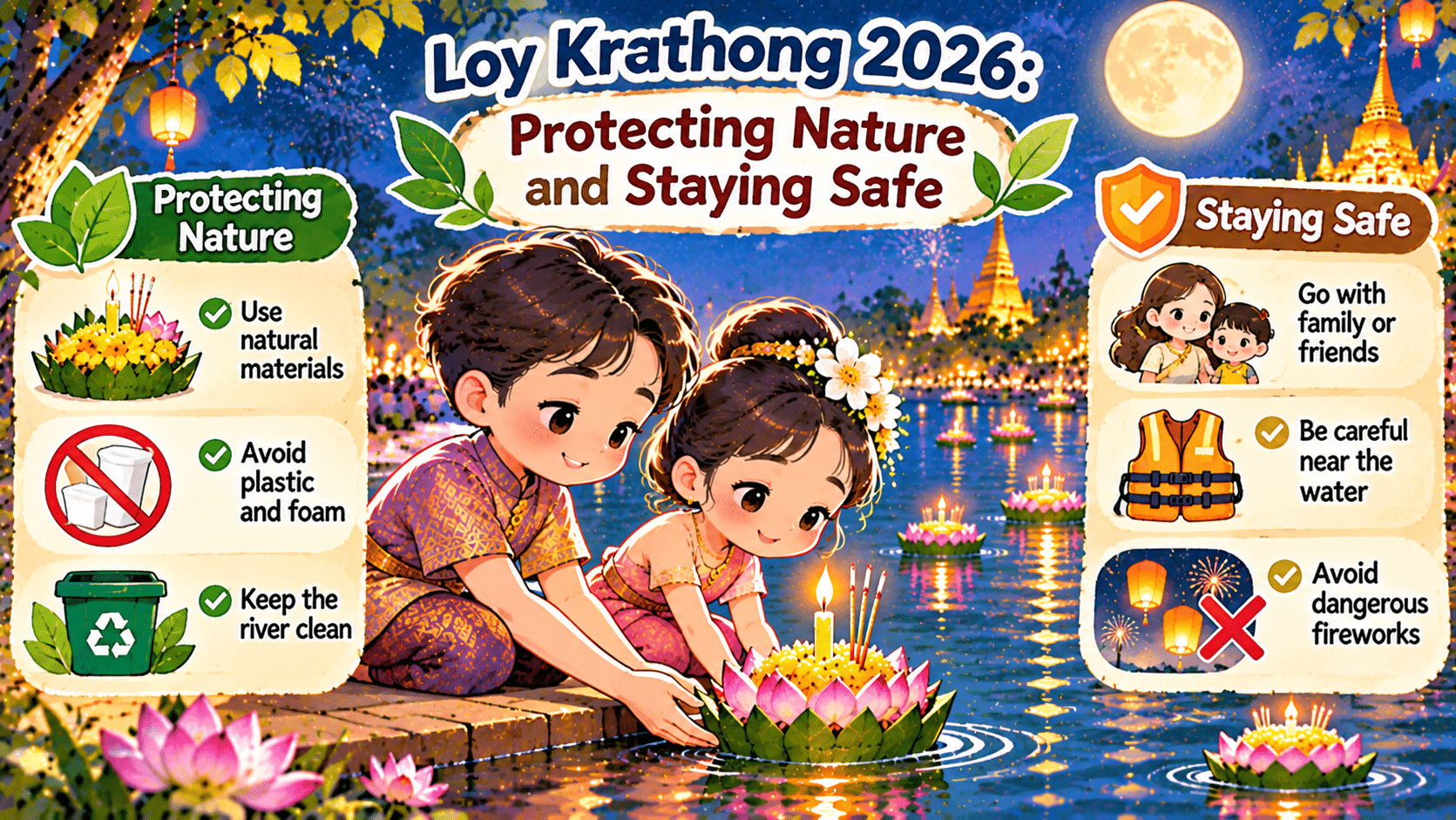
Today, Thai people are also becoming more aware of the importance of protecting water resources. There are campaigns encouraging people to use krathongs made from natural and biodegradable materials and to avoid materials that may harm the environment. This helps preserve the beauty of Loy Krathong so that the tradition can continue to be part of Thai culture for generations to come.
Loy Krathong 2026: Protecting Nature and Staying Safe
I sincerely hope you have a wonderful time enjoying the beautiful krathongs during Loy Krathong, no matter which province in Thailand you choose to visit.
But there is one important thing I would like you to keep in mind: protecting nature and the environment.
Protecting Nature and Staying Safe
If you are going to float krathongs with four or five friends, I suggest sharing just one krathong.
Even if it is made from bread or fish food, please remember one thing. Hundreds or thousands of people may float these krathongs into the water. The fish may not be able to eat all the food.
In a flowing river, krathongs may drift downstream. They may reach other areas where fish can find food.
However, things are different in a pond or an enclosed body of water. Leftover bread and food can build up. They may rot and create unpleasant smells.
Some ponds are specially prepared for Loy Krathong events. Staff may be available to look after the area. They can also collect the krathongs after the celebration.
Another thing to remember is to ask the krathong maker or vendor about the materials used. Do they use nails to hold the krathong together? Or do they use other materials instead?
Nails that come loose and fall into the water can be dangerous to aquatic animals.
For those planning to float krathongs in the sea at night, please be especially careful. Ocean currents can be dangerous, so choose a designated safe area and follow the instructions of local staff.
Finally, I wish you all a happy, enjoyable, and safe Loy Krathong celebration. I hope you get to experience the beauty of this Thai tradition while also helping us take care of nature.
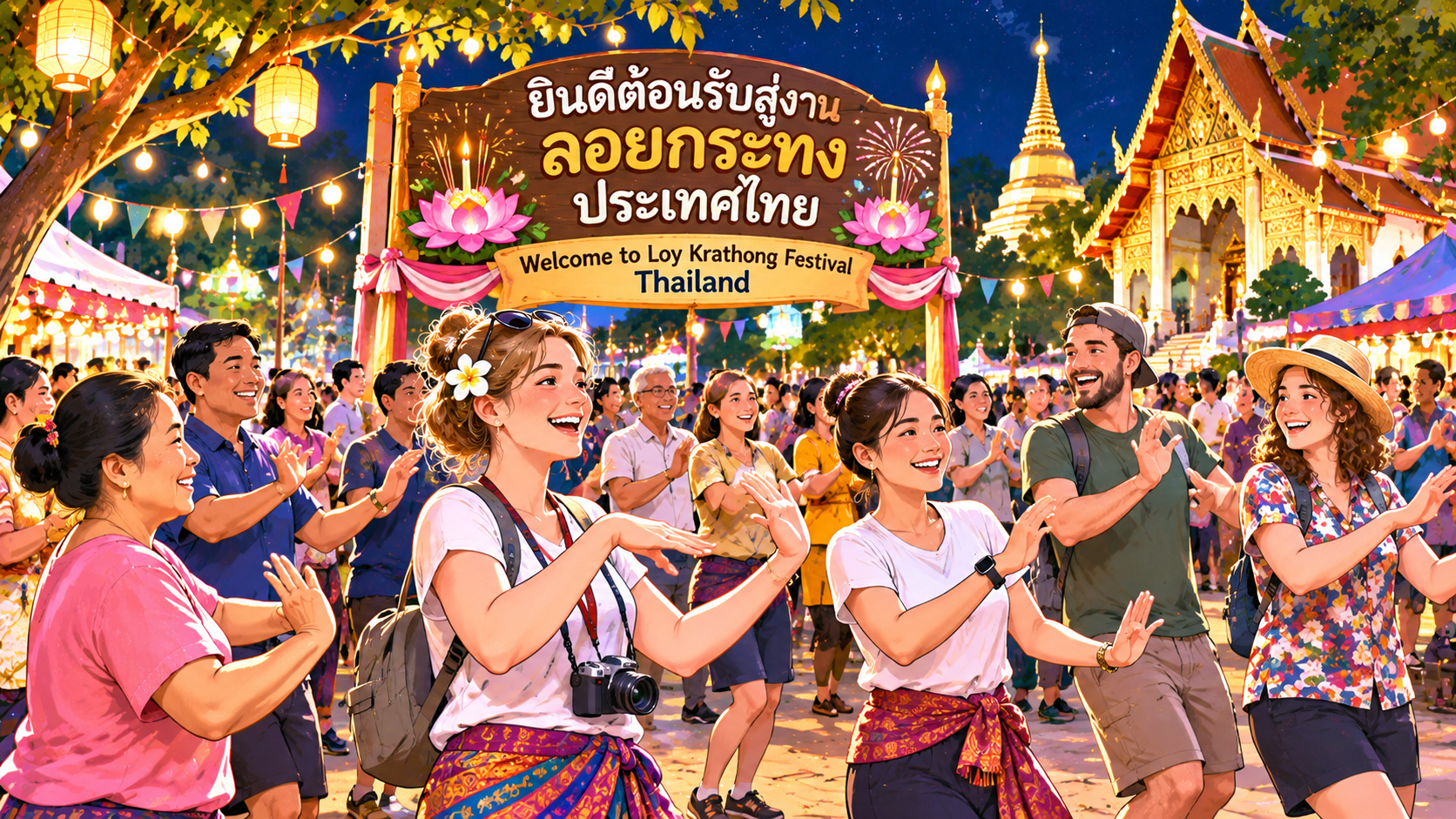
I hope you enjoy Loy Krathong 2026 in Thailand and take home wonderful memories of this beautiful festival.
Welcome to Thailand’s Loy Krathong Festival! 🪷