
PE Teacher at the Pool 1
PE Teacher at the Pool 1
This is not just a story about teaching children how to swim.
It is a collection of moments by the poolside—filled with laughter, fear, and small misunderstandings between children, parents, and teachers.
For over 20 years in the swimming pool, I have learned one important truth:
children swim better when adults slowly let go—and learn to trust both their children and the teacher.
This episode is one of many real stories from the field. Stories you will never find in any textbook.

PE Teacher at the Pool 1
I have been a swimming teacher for almost 20 years.
Two full decades surrounded by water, laughter, tears, fear, courage,
and far more confusing questions from parents than most people would expect.
I have taught everyone—young children, teenagers, adults, and even seniors.
Honestly speaking… adults and seniors are the easiest to teach.
The teacher says “swim five laps,” they swim five laps.
“Kick ten times,” they do exactly ten.
No cheating. No excuses.
Mostly because they are polite—and a little afraid of the teacher 😄
Teenagers are still manageable.
They get tired, complain a bit, sometimes slack off.
When the teacher scolds them, they grit their teeth and keep going.
They may gossip about the teacher behind my back, but overall—no big issues.
The hardest part of teaching swimming is not the children.
It’s the parents.
The Most Common Question
“When Will My Child Be Able to Dive?”**
Don’t accuse me of gossiping—but this really happens.
Some parents bring their 3½-year-old child to swim class.
The child attends the first lesson, then disappears for two weeks.
Comes back for the second lesson, then disappears again.
And then they ask:
“So… when will my child be able to dive and kick properly?”
Oh dear…
I hear this question so often that sometimes I don’t know
whether to answer with a smile or a deep sigh.
How can a child improve without continuity?
There is simply not enough practice.
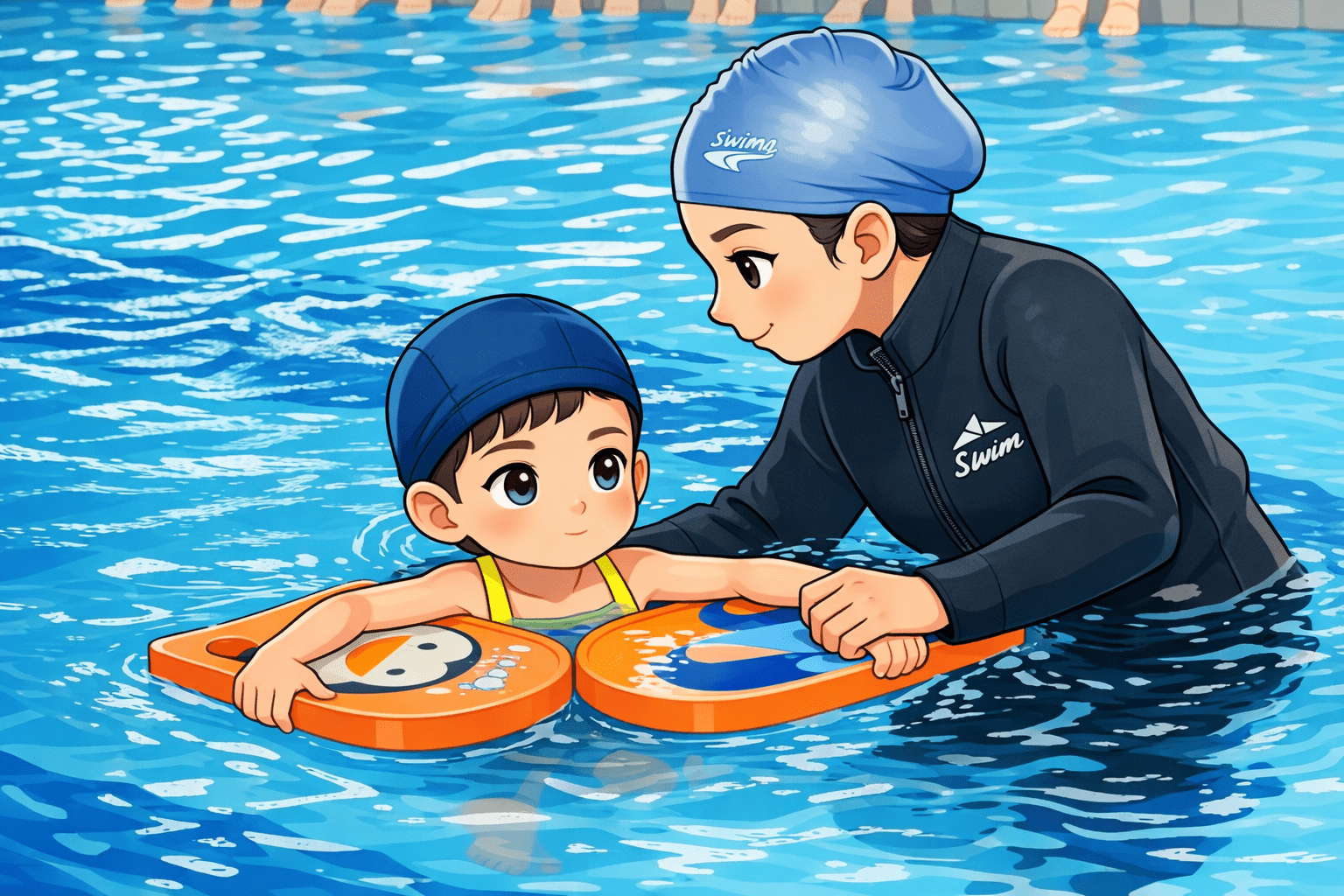
I usually teach only on weekends.
Children who come regularly—after about four weeks—
can already dive, hold the foam board, and kick on their own.
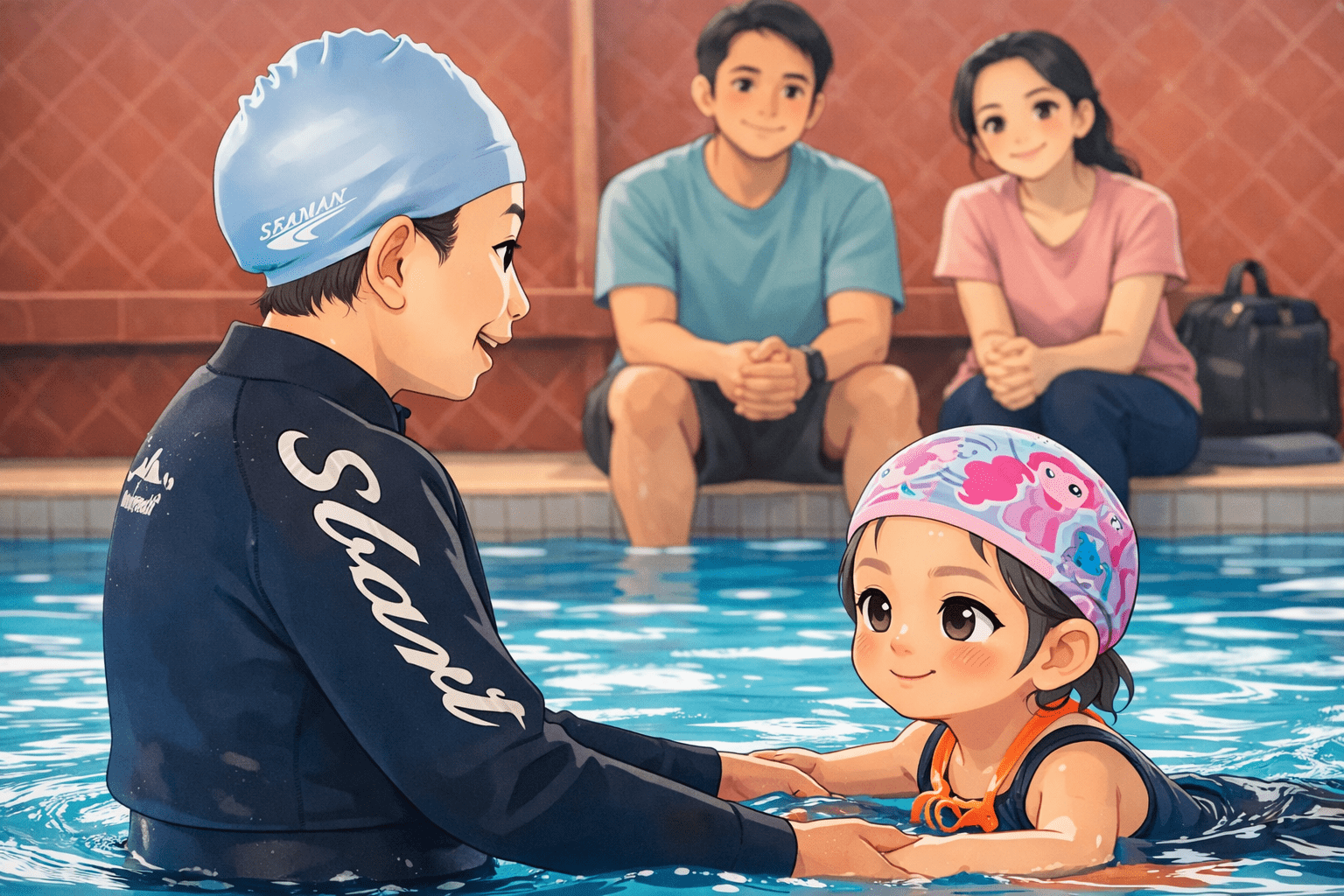
The truth is, most children love water.
Only a very small number are genuinely afraid.
Fear of water can come from many reasons:
– personal dislike
– choking while washing hair
– a past accident involving water
If your child is afraid, please be honest with the teacher.
We are not here to judge anyone.
We just want to understand the child correctly—
so we can help heal that fear the right way.
Every teacher has a different way of talking, persuading, and comforting children.
The teacher’s job is to guide the child safely into the water.
The parents’ job is… not to decide everything for the child.
Parents often sit by the poolside and think:
“My child is cold.”
“My child is tired.”
“My child is hungry.”
But have you asked your child?
Sometimes, good intentions turn into pressure without realizing it.
Some children are shivering, lips turning blue or purple—
yet parents still insist they finish the full 1½-hour session,
even on a very cold day.
Meanwhile, the teacher is wearing a 3 mm thermal wetsuit.
Yes, even though I’m someone who hates the cold and has allergies.
On especially cold days, I wear extra layers too.
Being a swimming teacher when you’re sensitive to cold
means you have to prepare really well.
PE Teacher at the Pool 1: Children are actually very easy to encourage
Praise them often—they love it.
A few kind words from parents have more power than you think.
When sitting by the pool, don’t just stare at your phone.
Look at your child.
Take photos. Take videos. Keep those memories.
One day, your child will remember and say:
“Oh… this is the teacher who taught me how to swim.”
Parents don’t need to help too much.
Some children are afraid and look for excuses—
adjusting goggles, fixing caps, removing them, putting them back on—
over and over for the entire session.
And parents go along with it.
In the end, the lesson time is gone, and nothing is learned.
The teacher gets frustrated too.
You paid for swimming lessons—your child should actually learn.
Parents need to recognize when fear and insecurity are at play.
Speak gently to your child.
Then let the teacher handle it.
Teachers know how to adjust.
Otherwise, don’t interfere—and later ask,
“Why did we even hire a teacher?”
You want results, but teaching like this is not worth the fee at all.

Please don’t create drama about teachers.
Situations like this are actually very rare.
Most parents are kind and supportive—
some even bring mats and wait patiently by the pool.